Coin Microscope Glare Reduction Lighting Uk
Direct answer: glare on coins is usually a lighting geometry problem before it is a magnification problem. If a 50p, £1 or £2 coin blows out under the microscope, first dim the light, move it off-axis, diffuse it and rotate the coin. More advertised X often makes the hotspot larger, not more useful.
Why shiny coins defeat simple ring lighting
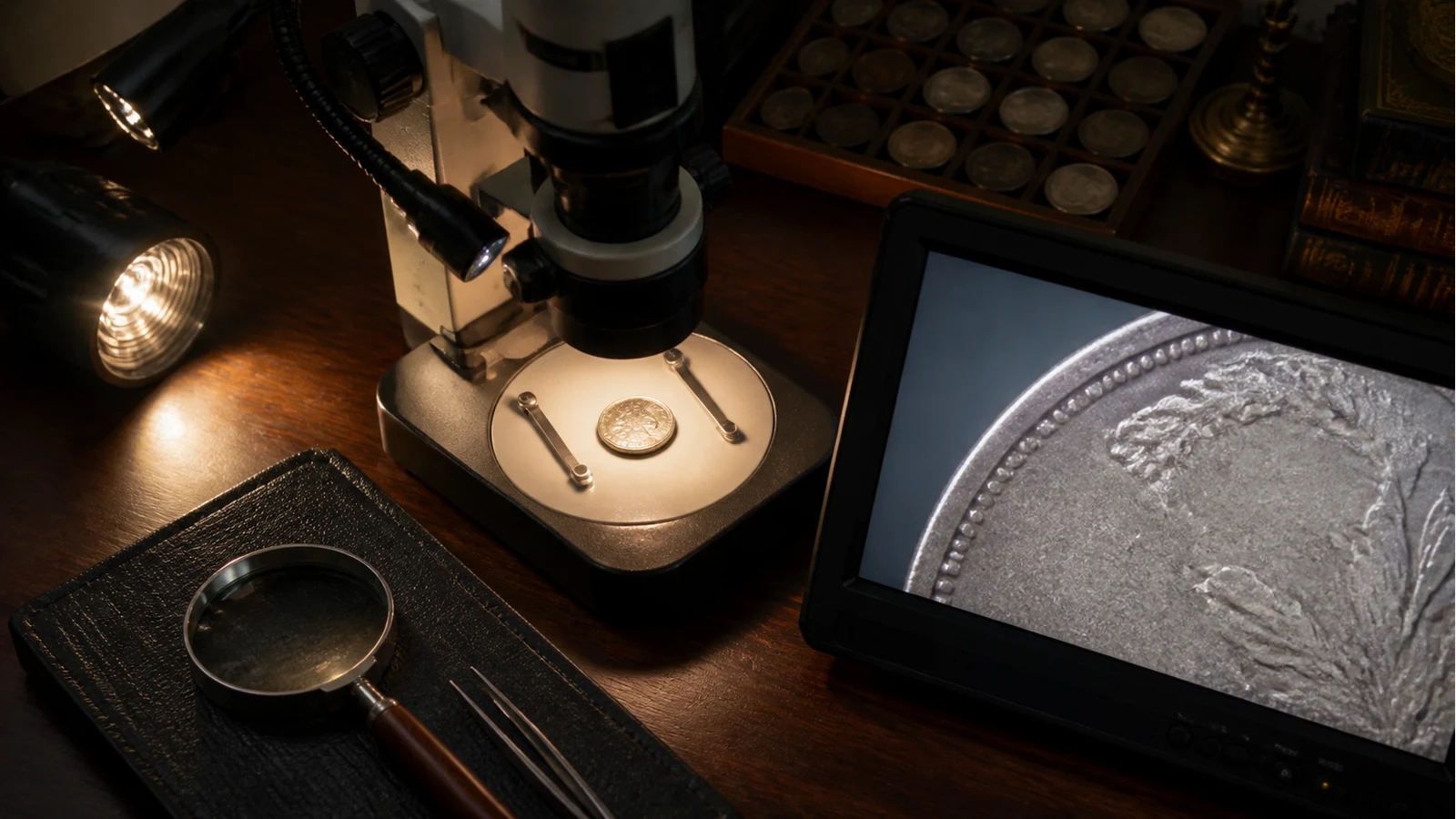
Proof-like fields behave like small mirrors. A ring light around the lens sends light straight down and straight back, which can hide doubling, scratches and edge detail. A specialist coin microscope lighting guide explains the same practical pattern: harsh direct light creates hotspots, while dimming, diffusion and angled lighting reduce clipped highlights.
Five-Minute Glare Checklist
- Turn the built-in LEDs down before changing magnification.
- Move a small lamp to the side rather than directly above the coin.
- Add a plain white diffuser between lamp and coin, keeping heat away from the setup.
- Rotate the coin slowly; many errors appear when the light catches the relief at an angle.
- Lock exposure and white balance if your capture app allows it, so the screen does not keep chasing reflections.
Where a larger screen helps
A bigger screen does not authenticate a coin or grade toning. It helps because you can see clipped highlights while adjusting the light, without bending over a loupe. UK listings for screen-based coin microscopes, such as this UK LCD coin microscope retail listing, show why collectors look for built-in screens and adjustable LEDs: setup comfort matters during a tray of coins.
What not to expect
Do not use screen colour alone to judge toning, cleaning or value. Do not assume a microscope image proves rarity. The job here is observation and documentation: make the date, rim, lettering and suspected error visible enough for your notes or for a more qualified second opinion.
When to consider a different microscope
If your current setup cannot frame a whole coin, a larger-screen digital microscope can make sorting more comfortable. If your problem is only glare, fix lighting first. For a whole-coin workflow, continue with error coin microscope with a large screen.